
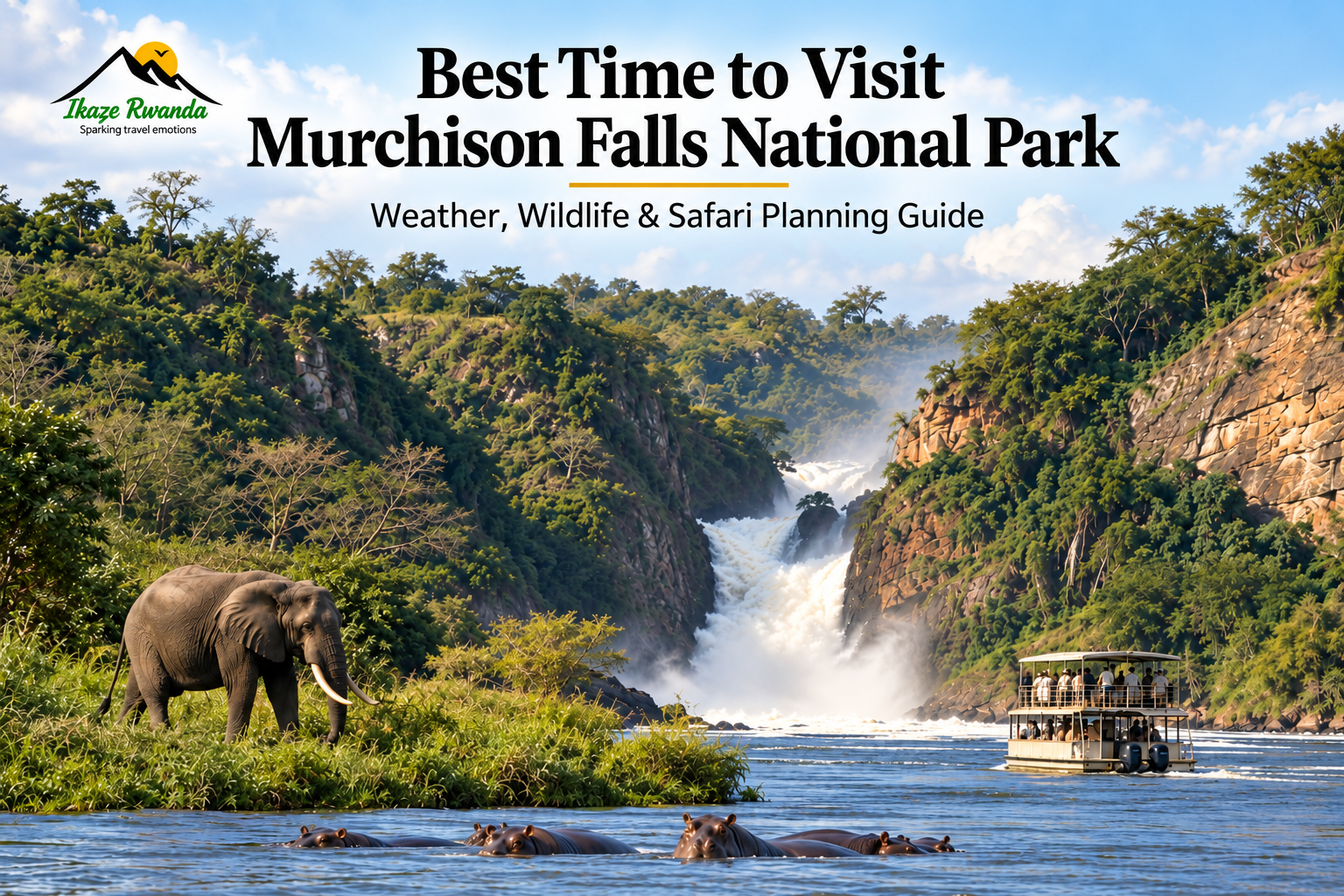
Murchison Falls National Park combines open savannah, abundant wildlife, the Victoria Nile and the spectacular Murchison Falls in one destination. Covering about 3,840 km², it is Uganda’s largest national park and one of the country’s oldest protected areas.
If you are planning a Uganda safari, one of the first questions to consider is when to visit Murchison Falls National Park.
The best time depends on what you want from your trip. The dry months can make wildlife easier to spot because animals often stay closer to reliable water sources, while the wetter months bring greener scenery and can be rewarding for birdwatching and photography.
According to the Uganda Wildlife Authority, December to February and June to September are the main dry periods.
Whether you are interested in game drives, a Nile boat cruise, photography or visiting the famous falls, choosing the right season can make your safari more comfortable and enjoyable.
When Is the Best Time to Visit Murchison Falls National Park?
For a classic wildlife safari, June to September and December to February are generally good periods to consider.
During these months, rainfall is usually lower, and animals tend to gather around rivers, waterholes and other remaining water sources. This can make wildlife easier to find during game drives. Some park roads may also be easier to travel on during drier conditions.
However, Murchison Falls National Park is open to visitors throughout the year, so visiting during the wetter months is also an option.
The Best Season Based on Your Travel Goals
| Travel Goal | Period to Consider |
| Wildlife viewing | June–September and December–February |
| Birdwatching | Throughout the year |
| Green landscapes | Wetter months |
| Photography | Both dry and wet seasons |
| Quieter travel | Some wetter periods |
The ideal time ultimately depends on what you want to experience during your safari.
Murchison Falls in the Dry Season
If wildlife is your main priority, the dry season is a popular time to visit Murchison Falls.
As smaller water sources become less available, animals often spend more time around reliable sources of water. This can increase your chances of seeing elephants, buffaloes, giraffes and other wildlife during game drives.
The landscape also takes on the classic African savannah appearance. Open grasslands, scattered trees and wildlife around water sources create excellent opportunities for photography.
The dry season can also make long game drives more comfortable from a road-access perspective, although conditions can still vary depending on recent weather.
If your main goal is to maximise your opportunities for wildlife encounters, the dry months are a practical period to consider.
What Is Murchison Falls Like During the Wet Season?
When the rains arrive, Murchison Falls National Park changes noticeably.
Rain is more common around March to May and October to November, although weather patterns can vary from year to year. The rainfall brings fresh vegetation and turns much of the landscape a deeper green.
For landscape photographers, this can be an attractive time to visit. The combination of green scenery, dramatic skies and wildlife creates a different visual experience from the drier months.
The wet season can also be interesting for birdwatchers. Murchison Falls is known for its birdlife, and the Albert Delta wetland provides important habitat for waterbirds, including the shoebill.
One thing to keep in mind is that rain can make some roads and outdoor activities less predictable. If you travel during wetter months, allowing some flexibility in your itinerary can be useful.
Best Time for Wildlife Viewing
Murchison Falls is home to a wide range of wildlife, including elephants, giraffes, buffaloes, hippos, crocodiles and several antelope species.
If wildlife viewing is your main focus, June to September is worth considering because it falls within one of the park’s main dry periods.
Early morning and late afternoon are often productive times for game viewing because temperatures are cooler and many animals are more active.
A typical safari day might include:
- An early morning game drive
- A break during the warmer part of the day
- An afternoon game drive
However, wildlife sightings can never be guaranteed. Animals move freely through the park, so every game drive can offer a different experience.
Best Time for a Nile Boat Cruise
A Nile boat cruise is one of the experiences that makes a Murchison Falls safari distinctive.
The Victoria Nile passes through the park before reaching the falls, allowing visitors to experience the landscape from the water. During the cruise, you may see hippos, crocodiles, elephants near the riverbanks and a variety of waterbirds.
The boat cruise is also useful for photographers because it provides a different perspective on the park’s wildlife and scenery.
It is best viewed as a complement to a game drive rather than a replacement for one. Game drives explore the savannah, while the boat cruise provides closer views of the river ecosystem and wildlife around the water.
Best Time for Birdwatching
Murchison Falls is also an appealing destination for birdwatchers.
The park supports a variety of habitats, including savannah, woodland and wetlands. The Albert Delta is particularly important for waterbirds and is known as a place where visitors may look for the shoebill.
Birdwatching is possible throughout the year, although weather, habitat conditions and seasonal movements can influence what you see.
If birds are your main reason for visiting, it can be more useful to plan around the species and habitats you want to explore rather than focusing only on the traditional peak safari periods.
How Many Days Do You Need in Murchison Falls?
For a first visit, three days can provide enough time to experience several of the park’s main attractions.
A Simple 3-Day Murchison Falls Itinerary
Day 1: Arrival
Travel to the Murchison Falls area and check into your accommodation. Depending on your arrival time, you can relax and prepare for the following day’s activities.
Day 2: Game Drive and Nile Cruise
Start with an early morning game drive when wildlife is often more active. Later in the day, take a Nile boat cruise to explore the river and observe wildlife from the water.
Day 3: Top of the Falls
Visit the Top of the Falls before continuing to your next destination.
If you have an additional day, you can take another game drive, spend more time birdwatching or simply enjoy your accommodation and surroundings at a slower pace.
If you are planning your Uganda safari with Ikaze Rwanda Tours & Travel, you can also ask about combining Murchison Falls with other destinations in Uganda or Rwanda.
What Should You Pack for Murchison Falls?
Packing appropriately can make your safari much more comfortable.
Safari Packing Checklist
Consider bringing:
- Lightweight, breathable clothing
- Comfortable walking shoes
- A light jacket for cool mornings
- Hat or cap
- Sunglasses
- Sunscreen
- Insect repellent
- Reusable water bottle
- Binoculars
- Camera and spare batteries
- Small daypack
Neutral-coloured clothing is a practical choice for spending time in the bush.
If you are travelling during the wetter months, bring a light rain jacket and waterproof protection for your camera and other electronics.
Final Thoughts
There is no single month that is perfect for every visitor to Murchison Falls National Park.
If your priority is wildlife viewing and generally drier safari conditions, June to September and December to February are useful periods to consider.
If you prefer greener scenery, birdwatching and potentially quieter travel, the wetter months can also offer a rewarding experience.
The best approach is to plan your visit around what you actually want to see and do. Whether your itinerary includes game drives, a Nile boat cruise, birdwatching or the famous waterfall, Murchison Falls can be a memorable part of a Uganda safari.
If you are planning your trip with Ikaze Rwanda Tours & Travel, Murchison Falls can also be incorporated into a wider Rwanda-Uganda journey.