
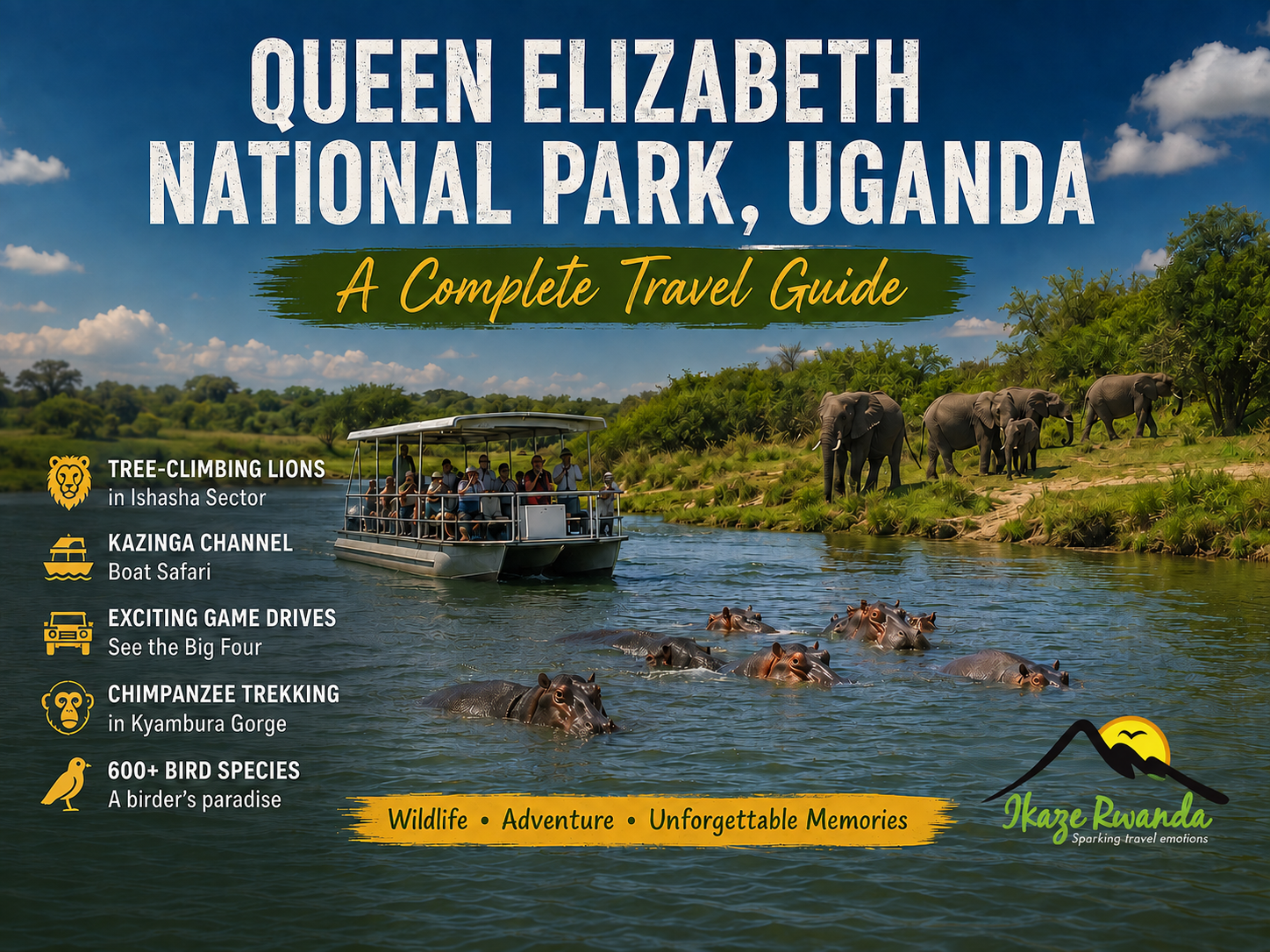
Queen Elizabeth National Park is one of the best places to experience Uganda’s wildlife, scenery and birdlife in a single safari. Located in western Uganda beneath the Rwenzori Mountains, the park combines open savannah, wetlands, crater lakes, forests and the wildlife-rich Kazinga Channel. This variety makes it rewarding for first-time safari travellers, photographers, birdwatchers and visitors combining a Uganda safari with gorilla trekking in Bwindi.
Covering 1,978 square kilometres, the protected area became Kazinga National Park in 1952 and was renamed Queen Elizabeth National Park in 1954. It protects more than 95 mammal species and over 600 recorded bird species. A Queen Elizabeth National Park Uganda safari can therefore feel different from one activity to the next: a morning game drive may be followed by an afternoon boat cruise, a crater-lake viewpoint or a forest primate walk. Ikaze Rwanda Tours & Travel can help travellers combine these experiences into a well-planned Uganda safari itinerary.
Where Is Queen Elizabeth National Park?
The park lies in western Uganda, approximately 410 kilometres from Kampala. A direct road journey generally takes at least seven to eight hours, although many itineraries include stops at Fort Portal, Kibale National Park or Lake Mburo National Park.
Travellers with limited time can use scheduled or charter flights from Entebbe or Kajjansi to airstrips near Kasese, Mweya or Kihihi. The Ishasha Sector in the south lies on a common route towards Bwindi Impenetrable National Park, making QENP Uganda a practical addition to a wildlife-and-gorilla itinerary.
Wildlife in Queen Elizabeth National Park
The park’s varied habitats support African elephants, Cape buffaloes, hippos, Uganda kobs, waterbucks, warthogs and several monkey species. Predators include lions, leopards, spotted hyenas and side-striped jackals, although sightings are never guaranteed. With experienced safari planning from Ikaze Rwanda Tours & Travel, visitors can explore the park’s key wildlife areas and enjoy rewarding game-viewing opportunities.
Travellers searching for “Queen Elizabeth Big Five” should know that the park is not a complete Big Five destination. Lions, leopards, elephants and buffaloes occur here, but rhinos do not. Uganda’s restored rhino populations are currently being managed in other protected locations rather than Queen Elizabeth National Park. What the park offers instead is a broad safari experience combining big game, primates, aquatic wildlife and exceptional birding.
The Famous Tree-Climbing Lions of Uganda
The tree climbing lions Uganda is famous for are most closely associated with the southern Ishasha Sector. Here, lions are sometimes seen resting on the broad branches of fig trees above the savannah.
Suggested explanations include avoiding insects, catching cooler breezes and gaining a better view of the surrounding plains, but there is no single confirmed reason for the behaviour.
Finding the Ishasha Sector lions requires patience. They may be on the ground, hidden in vegetation or moving through a different part of their territory. An experienced guide can improve the chances of a sighting. Ishasha also offers a quieter safari atmosphere, with elephants, buffaloes, Uganda kobs and other animals roaming the plains.
The Kazinga Channel Boat Safari
A Kazinga Channel boat safari is one of the park’s most reliable wildlife experiences. The waterway connects Lake George and Lake Edward and attracts animals throughout the year. Visitors may see large groups of hippos, Nile crocodiles, buffaloes, elephants and antelopes along the banks.
Birdlife is another highlight, with pelicans, African fish eagles, kingfishers, herons, storks and cormorants often observed.
Official park information describes the standard launch trip as a relaxed two-hour return journey from Mweya towards Lake Edward. The boat provides excellent opportunities for wildlife observation and photography near the shoreline. Carry binoculars, protect cameras from spray and follow the crew’s safety instructions.
Queen Elizabeth Park Game Drives
A Queen Elizabeth Park game drive is best planned for early morning or late afternoon, when temperatures are cooler and animals are often more active.
The Kasenyi Plains are the central park’s main game-viewing area. Herds of Uganda kobs attract predators, making this a key place to search for lions and hyenas.
Around Mweya and the Channel Track, travellers may encounter elephants, buffaloes, warthogs, antelopes and occasionally leopards. Vegetation can be thick in places, so a knowledgeable guide is valuable for interpreting tracks, alarm calls and animal behaviour.
Chimpanzee Tracking in Kyambura Gorge
Kyambura Gorge offers a dramatic change from the open savannah. Its riverine forest provides habitat for chimpanzees, monkeys and forest birds. Uganda Wildlife Authority identifies Kyambura as an official chimpanzee-tracking location within the Queen Elizabeth conservation area.
Chimpanzee sightings are not guaranteed because the community moves through challenging forest terrain. Even so, the guided walk is memorable for its scenery and contrast with the plains.
Permits should be arranged in advance through Uganda Wildlife Authority or a licensed safari operator. Ikaze Rwanda Tours & Travel can also assist travellers with planning safari activities, permits and connections with other destinations in Uganda and Rwanda.
Birdwatching and Crater-Lake Scenery
With more than 600 recorded bird species, Queen Elizabeth National Park is one of Uganda’s leading birding destinations. Its savannah, forests, lakes and wetlands support both land and water birds.
Even casual visitors may see African fish eagles, kingfishers, pelicans, storks, egrets and bee-eaters.
The Katwe Explosion Crater area reveals the park’s volcanic history. A scenic drive passes crater lakes, dry calderas, grasslands and Rift Valley viewpoints. On clear days, visitors can enjoy wide views towards the Rwenzori Mountains and Lake Edward.
Best Time to Visit Queen Elizabeth National Park
The park can be visited throughout the year. For general wildlife viewing, the drier periods—usually June to August and December to February—often bring easier road conditions and concentrate animals near reliable water sources. These are popular travel months, so early booking is advisable.
Wetter periods create greener landscapes, dramatic skies and strong birding opportunities, but some tracks may become muddy. Choose the season according to your priorities: drier months for easier game drives or greener months for scenery and fewer visitors. Ikaze Rwanda Tours & Travel can help travellers plan their visit according to the season, preferred safari activities and overall Uganda itinerary.
Where to Stay
Accommodation ranges from campsites and simple cottages to mid-range camps and luxury lodges. The Mweya Peninsula is convenient for Kazinga Channel cruises and central-sector game drives.
Mweya Safari Lodge is located on the peninsula, overlooking the Kazinga Channel and providing access to activities including game drives, water safaris, birding and crater excursions.
Travellers focusing on tree-climbing lions should consider spending a night in or near Ishasha. This reduces travel time from Mweya and creates more opportunities to search during the cooler morning and afternoon hours.
What to Pack for Your Safari
Pack lightweight, neutral-coloured clothing, a warm layer for early drives, a sun hat, sunscreen, insect repellent and comfortable closed shoes.
Binoculars greatly improve wildlife and bird viewing, while a camera with a zoom lens is helpful for photographing distant animals.
Bring a reusable water bottle, personal medication, a small daypack and rain protection. Roads can be dusty, so carry lens cloths and a light scarf. Never leave food unattended around monkeys or baboons.
Suggested Three-Day Safari Itinerary
Day one: Arrive in the central park area and take an afternoon game drive around Kasenyi or Mweya.
Day two: Begin with an early game drive, rest during the warmer midday hours and join an afternoon Kazinga Channel boat safari.
Day three: Track chimpanzees in Kyambura Gorge or drive south through Ishasha to search for tree-climbing lions before continuing towards Bwindi.
A fourth day allows more time for crater lakes, birdwatching and a slower exploration of Ishasha. Ikaze Rwanda Tours & Travel can customise the itinerary according to the traveller’s available time, interests and onward travel plans.
Practical Travel Tips
Use a four-wheel-drive vehicle, particularly during rainy periods and when travelling through Ishasha. Follow ranger instructions, remain inside the vehicle unless told otherwise and never pressure a driver to approach animals too closely.
Allow extra time between activities because road conditions and wildlife sightings are unpredictable.
Park fees, activity prices and permit rules can change. Confirm current costs with Uganda Wildlife Authority or a licensed safari operator before travelling. A well-planned Queen Elizabeth National Park Uganda safari should balance early starts with rest rather than trying to visit every sector in one day.
Frequently Asked Questions
Is Queen Elizabeth National Park worth visiting?
Yes. It combines wildlife game drives, a productive boat safari, tree-climbing lions, crater scenery, birdwatching and optional chimpanzee tracking within one destination.
How many days are needed?
Two nights provide a useful introduction, but three or four nights are better for combining Mweya, the Kazinga Channel, Kyambura Gorge and Ishasha.
Are the tree-climbing lions guaranteed?
No. The lions are wild and may rest on the ground, hide in vegetation or move beyond the area being searched.
Can the park be combined with gorilla trekking?
Yes. Ishasha lies on a popular route towards Bwindi Impenetrable National Park, making Queen Elizabeth National Park an excellent wildlife addition to a gorilla-trekking trip.
Is the park suitable for families?
Generally, yes, especially for game drives and the Kazinga Channel cruise. Age limits may apply to chimpanzee tracking, so families should confirm current rules before booking.
Final Thoughts
Queen Elizabeth National Park offers more than a checklist of animals. Its appeal comes from the contrast between open savannah, forested gorges, volcanic craters and the active shores of the Kazinga Channel.
Whether your priority is finding the Ishasha Sector lions, taking a relaxing boat safari, photographing birds or experiencing a wider Uganda adventure, thoughtful planning will help you enjoy the park at its best. Ikaze Rwanda Tours & Travel can help create a personalised journey that combines Queen Elizabeth National Park with other memorable safari and gorilla-trekking experiences across Uganda and Rwanda.